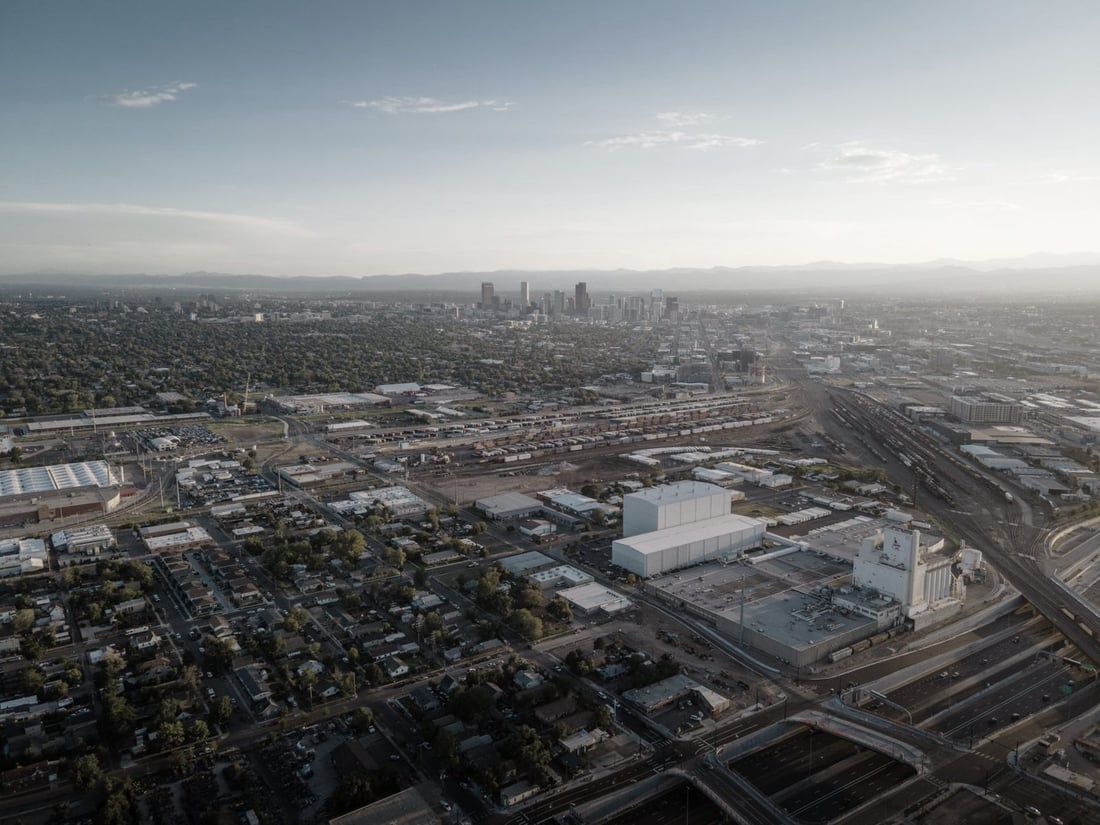
The Denver metro spreads across seven counties, and your loan limits, property taxes and insurance costs depend on which one you land in. Aurora alone touches three. This guide covers what changes from county to county in 2026 and how to finance a purchase in the suburbs where most of the metro's buying actually happens.
The county map (it matters more than the city name)
- Adams County — Brighton, Thornton, Commerce City, northern Aurora
- Arapahoe County — Littleton (east of Santa Fe), Centennial, central Aurora
- Jefferson County — Lakewood, Arvada, Littleton (west side, Ken Caryl)
- Douglas County — Parker, Castle Rock, Highlands Ranch, Lone Tree
- Broomfield — a consolidated city-and-county
- Boulder County — Boulder, Louisville, Lafayette, Longmont, western Erie
- Denver — the city and county of Denver
Denver, Adams, Arapahoe, Jefferson, Douglas and Broomfield sit in the same statistical area (Denver–Aurora–Centennial), so their 2026 conforming and FHA limits are identical. Boulder County is its own area with a slightly higher limit.
2026 loan limits by county
| County (areas) | 2026 conforming limit (1-unit) | 2026 FHA limit (1-unit) | HUD 2026 area median price |
|---|---|---|---|
| Denver | $862,500 | $862,500 | $750,000 |
| Adams (Brighton, north Aurora) | $862,500 | $862,500 | $750,000 |
| Arapahoe (central Aurora, east Littleton) | $862,500 | $862,500 | $750,000 |
| Jefferson (west Littleton, Ken Caryl) | $862,500 | $862,500 | $750,000 |
| Douglas (Parker, Castle Rock) | $862,500 | $862,500 | $750,000 |
| Broomfield | $862,500 | $862,500 | $750,000 |
| Boulder (Boulder, Louisville, Lafayette) | $879,750 | $879,750 | $765,000 |
Two things stand out:
- Denver is a high-cost area. The six core counties carry a conforming limit of $862,500 — above the $832,750 national baseline — and an FHA limit set at the same $862,500. That means FHA covers the same price range as conventional here, which is unusual and useful for buyers with smaller down payments.
- Boulder County is higher still at $879,750 for both conforming and FHA.
Anything above those figures is a jumbo loan — routine in Boulder proper, Cherry Hills, and the foothill edges of Jefferson and Douglas counties. The statewide county table is in our Colorado loan limits guide.
Metro districts: the line item that surprises newcomers
Most Colorado subdivisions built since the 1990s — Parker's Stonegate, Castle Rock's The Meadows, Broomfield's Anthem, Brighton's newer neighborhoods, southeast Aurora — are served by a Title 32 metropolitan district. The district issued bonds to build the roads, water lines and parks, and it repays them through an additional mill levy on each home's property-tax bill.
Why it matters to your mortgage:
- It is part of your qualifying payment. Lenders escrow and qualify on the full tax bill, metro-district levy included. Two similar homes a few miles apart can carry meaningfully different monthly payments because one sits in a district with a heavy debt load and the other doesn't.
- Mill levies differ by district, not by city. A home's total mill levy — county, school district, fire, water, metro district — is public record through the county assessor. Ask your loan officer to pull it before you write an offer so the payment you're pre-approved for is the payment you'll actually make.
- Colorado's residential assessment rate is applied to actual value before mills are calculated, which is why Colorado property taxes are lower in dollar terms than many out-of-state buyers expect, even with a metro district attached.
Insurance: hail, wildfire and the payment
The Front Range is one of the most hail-prone regions in the country, and homeowners-insurance premiums (and roof-age requirements) reflect it. Foothill and wildland-interface addresses in Jefferson, Boulder and Douglas counties may also carry wildfire-related underwriting. Insurance is part of your qualifying payment, so get a real quote on a specific property early — not an estimate — especially for older roofs.
Down-payment assistance along the Front Range
Colorado's housing finance authority, CHFA, offers a grant or a 0% deferred second mortgage for down payment and closing costs, paired with CHFA first-mortgage programs through participating lenders. Our CHFA guide explains the grant-vs-second-mortgage decision and the current caps. Several metro-area cities and counties run local programs that open and close with funding cycles; a loan officer who works them regularly will know what's actually funded this quarter.
Which loan fits which suburb?
- Aurora and Brighton have the metro's deepest supply of homes priced well under the FHA limit, so FHA and CHFA-assisted purchases are common, along with VA financing around Buckley Space Force Base.
- Littleton, Parker and Castle Rock are predominantly conventional markets with steady new-construction activity; builder-lender incentives are worth comparing line by line against an outside quote before you commit.
- Broomfield spans starter townhomes to larger homes in Anthem and McKay Landing; its city-and-county status means one assessor and one set of rates, which keeps the tax math simple.
- Boulder is largely a jumbo market with a high share of technology, research and self-employment income — documentation planning starts early. Louisville and Lafayette offer a conventional-range alternative inside the same county limits.
Frequently asked questions
Does the higher Denver loan limit mean I need a bigger down payment? No — the limit is the maximum loan size for conforming or FHA financing, not a down-payment rule. A conventional loan still allows as little as 3% down for eligible first-time buyers, and FHA allows 3.5%, up to the limits above.
How do I find out if a home is in a metro district? The county assessor's parcel record lists every taxing authority and its mill levy. Sellers in Colorado also provide a metro-district disclosure. Your loan officer can pull the parcel data while you're still deciding whether to tour.
Are Denver property taxes high? In dollar terms they are typically lower than in many other states because of Colorado's assessment-rate structure, but metro-district levies can push a newer-subdivision bill noticeably above an older neighborhood's. The parcel record settles it.
Is FHA worth considering if I can qualify conventionally? In Denver's high-cost counties the FHA limit equals the conforming limit, so FHA is a genuine option across most of the price range. Which is cheaper depends on your credit profile, down payment and mortgage-insurance costs — a side-by-side comparison answers it quickly.
Talk to someone who lives here
Xpert Home Lending Inc.'s loan officers live and work across the Denver metro — serving Aurora, Littleton, Parker, Castle Rock, Broomfield, Brighton and Boulder — and they price metro districts, insurance and county limits into pre-approvals every day. Start a conversation when you're ready.
Sources
- FHFA 2026 Conforming Loan Limit Values
- HUD FHA Mortgage Limits — 2026 FHA limits and area median prices
- Colorado Department of Local Affairs — Special Districts — Title 32 metropolitan district background
- Colorado Division of Property Taxation — residential assessment rates and mill levies
- CHFA Homeownership
Loan limits are published annually by FHFA and HUD and are current for 2026 as of August 2026; mill levies, insurance premiums, builder incentives and program terms vary by property and change without notice. This is general information, not a loan offer, a commitment to lend, or tax or insurance advice. Xpert Home Lending Inc., NMLS #2179191. Equal Housing Lender.